










Epilepsy Treatment in India
Get advanced epilepsy treatment in India from experienced neurologists and neurosurgeons. MedTreeva connects patients with modern diagnosis, medication, and surgical options for better seizure control.
✓ Advanced Epilepsy Care
✓ Experienced Neurologists & Surgeons
✓ Affordable Treatment for International Patients
Epilepsy Treatment in India
Advanced Care for Seizure Disorders, Epilepsy Surgery, and Long-Term Seizure Control
Epilepsy is a condition where a person has repeated seizures. Seizures happen when the brain sends wrong electrical signals. These signals can affect movement, speech, awareness, memory, and behavior.
A seizure may look different in each person. Some people may shake or fall. Some may stare blankly. Some may feel confused for a few minutes. Some may lose awareness. Epilepsy can affect children, adults, and elderly people.
Epilepsy treatment in India is available for all types of seizure disorders. India has experienced neurologists, trained epilepsy surgeons, advanced brain imaging, EEG monitoring, and modern surgery options. Many patients from Africa, the Middle East, Europe, the USA, Australia, and CIS countries travel to India for affordable epilepsy care.
Treatment may include medicines, lifestyle guidance, epilepsy surgery in India, or advanced device-based therapies. For patients whose seizures do not improve with medicines, epilepsy surgery can be a strong option. Choosing the best neurologist for epilepsy in India can help patients receive the right diagnosis and treatment plan.
Advanced Treatment Options
Patients can get medicines, epilepsy surgery, laser ablation, VNS, RNS, and deep brain stimulation for epilepsy in India. The treatment is selected based on the patient’s reports and seizure pattern.
VNS for Patients Not Fit for Brain Surgery
Vagus Nerve Stimulation (VNS) is a good option for patients who cannot have brain surgery. It does not remove brain tissue. The device sends mild electrical signals to help reduce seizures over time.
DBS for Drug-Resistant Epilepsy
Deep Brain Stimulation (DBS) may help patients with severe or drug-resistant epilepsy. It works by sending controlled pulses to specific brain areas. This can reduce seizure frequency and improve daily life.
Care for Children and Adults
India treats both adult and pediatric epilepsy. Children with newborn seizures, genetic epilepsy, brain injury-related epilepsy, and severe seizure disorders can receive care from pediatric neurologists.
Experienced Epilepsy Specialists
Patients can consult some of the best neurologists for epilepsy in India and experienced epilepsy surgeons. Many doctors are trained in modern seizure treatment and brain mapping techniques.
Lower Treatment Cost
The cost of seizure disorder treatment in India is much lower than in the USA, UK, Europe, and Middle East. Patients can access advanced care at a more affordable price.
Why Choose Epilepsy Treatment in India?
India is a trusted destination for epilepsy care. Patients choose India because they get expert treatment at a lower cost.
Main reasons include:
- Best neurologists: India has many of the best neurologists for epilepsy in India.
- Advanced surgery options: Hospitals offer temporal lobectomy in India, laser ablation epilepsy surgery, and deep brain stimulation for epilepsy.
- Device-based treatment: Options like Vagus nerve stimulation (VNS) therapy, Responsive neurostimulation (RNS), and DBS are available in selected hospitals.
- Affordable treatment cost: Epilepsy care in India is much cheaper than in the USA, UK, Europe, or Middle East.
- Modern diagnosis: Hospitals use EEG, video EEG, MRI, PET scan, and seizure monitoring units.
- International patient support: Patients get help with visa, airport pickup, hotel stay, language translators, and follow-up care.
India offers both medical and surgical care for epilepsy. This makes it a complete destination for seizure disorder treatment.
Conditions Treated
India treats many types of epilepsy and seizure disorders. Epilepsy treatment in India may include medicines, surgery, or advanced device-based therapies depending on the condition.
Focal Seizures / Partial Seizures
Focal seizures start in one part of the brain. The person may feel strange sensations, twitching, confusion, fear, or repeated movements. Some people remain aware. Some lose awareness for a short time.
Generalized Seizures
Generalized seizures affect both sides of the brain. These may cause full-body shaking, sudden falls, staring episodes, or loss of consciousness.
Drug-Resistant Epilepsy
Drug-resistant epilepsy means seizures do not stop even after using proper medicines. These patients may need epilepsy surgery in India, VNS, RNS, DBS, or other advanced treatments.
Temporal Lobe Epilepsy
Temporal lobe epilepsy starts in the temporal lobe of the brain. This area is linked with memory, emotions, and awareness. Temporal lobectomy in India may help selected patients with this condition. A best neurologist for epilepsy in India can help assess whether surgery is suitable.
Pediatric Epilepsy
Pediatric epilepsy affects children, babies, and teenagers. Children need special care because seizures can affect learning, behavior, and development.
Epileptic Encephalopathies
These are severe epilepsy conditions seen mostly in children. They can affect brain development. Early diagnosis and treatment are very important.
Symptoms of Epilepsy
Epilepsy symptoms depend on the type of seizure and the area of the brain involved.
Common symptoms include:
- Sudden shaking of arms or legs
- Loss of awareness
- Blank staring
- Confusion after a seizure
- Sudden fall
- Unusual fear or strange feeling
- Repeated lip-smacking or hand movements
- Sudden stiffness of the body
- Loss of bladder control
- Sleep disturbance
- Learning problems in children
Some seizures are very mild and may go unnoticed. This is why proper diagnosis is important.
Diagnosis and Evaluation
Before treatment begins, doctors first try to understand the type of seizure and where it starts in the brain.
Common tests include:
EEG
EEG checks electrical activity in the brain. It helps doctors find abnormal brain signals linked with seizures.
Video EEG Monitoring
Video EEG records the patient during seizures. It helps doctors match brain signals with body symptoms. This test is very useful for surgery planning.
MRI Brain
MRI gives detailed images of the brain. It can show scars, tumors, birth defects, or other causes of epilepsy.
PET Scan
PET scan checks brain activity. It helps locate the seizure area in some patients.
Blood Tests
Blood tests help check infection, medicine levels, liver function, kidney function, and other health problems.
Neuropsychology Testing
This test checks memory, speech, learning, and thinking ability. It is important before epilepsy surgery.
These tests help doctors choose the best treatment plan.
Medical Treatment for Epilepsy
Most people with epilepsy start treatment with medicines. These medicines are called anti-seizure or anti-epileptic drugs. Medicine aims to stop seizures or reduce how often they happen. Many patients get good control with the right medicine.
Doctors choose medicine based on:
- Type of seizure
- Age of patient
- Side effects
- Other health problems
- Pregnancy plans in women
- Previous treatment history
Sometimes, the first medicine may not work well. The doctor may change the dose or try another medicine. Patients should never stop epilepsy medicine without medical advice.
If seizures continue even after trying the right medicines, doctors may suggest surgery or device treatment. Patients may also be evaluated by the best neurologist for epilepsy in India to determine the most suitable treatment approach.
When is Epilepsy Surgery Needed?
Epilepsy surgery in India is suggested when medicines do not control seizures. This is usually called drug-resistant epilepsy.
Surgery may be considered when:
- Seizures start from one clear area of the brain
- The seizure area can be safely treated
- Medicines are not controlling seizures
- Seizures are affecting daily life
- Tests show surgery may help
- The seizure area is not responsible for important speech or memory function
Epilepsy surgery is planned very carefully. Doctors do many tests before deciding. The goal is to reduce seizures or stop them fully.
For selected patients, surgery can offer a possible surgical cure for epilepsy India.
Types of Epilepsy Surgery in India
India offers many advanced surgical options for epilepsy. Epilepsy surgery in India is considered for patients whose seizures do not improve with medicines.
1. Temporal Lobectomy in India
Temporal lobectomy is one of the most common epilepsy surgeries. It is used for patients with temporal lobe epilepsy.
In this surgery, the doctor removes the small part of the temporal lobe where seizures begin. This surgery can help many patients become seizure-free or have fewer seizures.
It is usually done after detailed EEG, MRI, PET scan, and memory testing. Patients are carefully evaluated by the best neurologist for epilepsy in India before surgery.
2. Laser Ablation Epilepsy Surgery
Laser ablation epilepsy surgery is a minimally invasive option. It uses laser heat to destroy the seizure-causing area.
The surgeon makes a very small opening. A thin laser probe is placed into the brain. MRI guidance helps the doctor target the exact area
This treatment may cause less pain and faster recovery than open surgery. It is useful for selected patients undergoing epilepsy treatment in India.
3. Vagus Nerve Stimulation VNS Therapy
Vagus nerve stimulation (VNS) therapy is a device-based treatment. The doctor places a small device under the skin near the chest. A wire connects it to the vagus nerve in the neck.
The device sends regular signals to the brain. These signals help reduce seizures.
VNS is useful for patients who cannot have brain surgery or whose seizures come from different brain areas. It may be considered when other epilepsy treatment in India options have not provided enough seizure control.
4. Responsive Neurostimulation RNS
Responsive neurostimulation (RNS) is an advanced treatment. A small device is placed inside the skull. Wires are placed near the seizure area.
The device watches brain activity. When it detects abnormal signals, it sends small electrical pulses to stop the seizure before it spreads.
RNS may help patients with one or two seizure areas who are not suitable for standard surgery. A detailed evaluation by experienced epilepsy specialists is required before this treatment.
5. Deep Brain Stimulation for Epilepsy
Deep brain stimulation for epilepsy is used for patients with difficult-to-control seizures. In this treatment, electrodes are placed in deep brain areas. These are connected to a device placed under the chest skin.
The device sends controlled electrical signals to reduce seizure activity.
DBS is usually advised when medicines and other options are not enough. It is performed by experienced epilepsy surgeons and may be considered for selected patients seeking advanced epilepsy treatment in India.
Pediatric Epilepsy Care in India
Children with epilepsy need special care. Their brain is still developing, so early diagnosis and treatment are very important.
India has pediatric neurologists and epilepsy specialists who treat children of all ages. Epilepsy treatment in India for children may include medicines, dietary therapy, epilepsy surgery, or device-based treatment depending on the child's condition.
They manage:
- Seizures in newborns
- Seizures in infants
- Genetic epilepsy
- Developmental delay with epilepsy
- Epileptic encephalopathies
- Brain injury-related seizures
- Drug-resistant pediatric epilepsy
For children whose seizures do not respond well to medicines, epilepsy surgery in India may be considered after detailed testing and evaluation.
Hospitals also provide child-friendly rooms, pediatric ICU, family support, and counseling. Parents receive clear guidance about medicines, seizure safety, school life, and emergency care.
Best Hospitals for Epilepsy Treatment in India
India has many advanced hospitals for epilepsy diagnosis and treatment. These hospitals have neurology teams, neurosurgery teams, EEG labs, MRI, PET scan, and seizure monitoring units.
Some hospitals often chosen for epilepsy care include:
- Apollo Hospitals
- Fortis Hospitals
- AIIMS Delhi
- Max Super Speciality Hospital
- Narayana Health
- Medanta The Medicity
The best hospital for epilepsy treatment in India depends on the patient's seizure type, age, reports, surgery need, and budget.
MedTreeva can help patients compare hospitals and choose the right epilepsy centre, including options for those seeking the best neurologist for epilepsy in India.
Epilepsy Surgeons in New Delhi, India
New Delhi is one of the leading cities for epilepsy care. Many patients choose epilepsy surgeons in New Delhi, India because the city has advanced hospitals and experienced doctors.
New Delhi offers:
- Advanced epilepsy monitoring
- Experienced neurologists
- Skilled neurosurgeons
- Brain mapping facilities
- Modern surgery options
- VNS, DBS, and selected advanced therapies
- Good international patient support
If you are looking for the top epilepsy surgeon in India, New Delhi is one of the best cities to consider.
Best Neurologist for Epilepsy in India
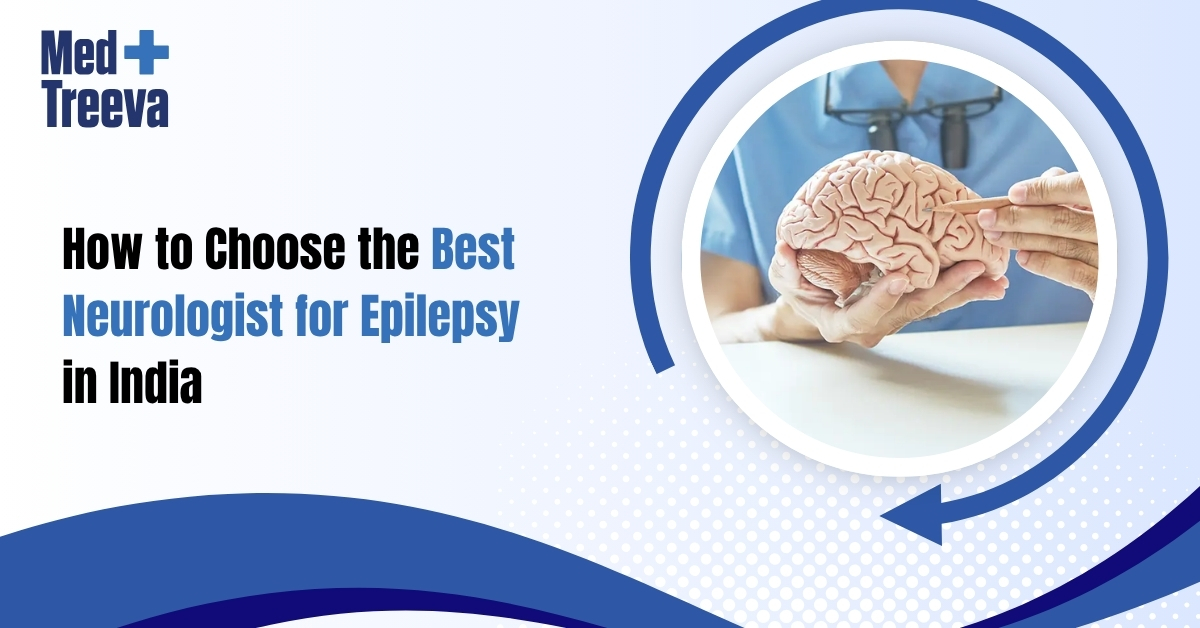
Choosing the right neurologist is very important. A good epilepsy neurologist can identify the seizure type and select the right medicine or surgery plan.
The best neurologist for epilepsy in India should have experience in:
- Epilepsy diagnosis
- EEG reading
- Medicine management
- Drug-resistant epilepsy
- Pediatric epilepsy
- Surgery evaluation
- Long-term seizure care
The neurologist works with neurosurgeons, radiologists, psychologists, and rehabilitation teams to provide complete care.
Cost of Epilepsy Treatment in India
India offers high-quality care at affordable cost. The final cost depends on the hospital, city, doctor, tests, surgery type, and patient condition.
| Treatment | Approx. Cost in India |
| EEG, MRI, PET, and basic tests | USD 300 – 600 |
| Anti-seizure medicines per year | USD 500 – 1,200 |
| Temporal Lobectomy | USD 5,000 – 8,000 |
| Laser Ablation Epilepsy Surgery | USD 6,000 – 9,000 |
| VNS Therapy | USD 8,000 – 12,000 |
| RNS Implant | USD 12,000 – 18,000 |
| Deep Brain Stimulation DBS | USD 15,000 – 20,000 |
These costs are often 60–70% lower than in Western countries.
The final estimate is given after doctor review and medical evaluation.
Recovery After Epilepsy Surgery
Recovery depends on the type of surgery. Some patients recover quickly after minimally invasive surgery. Open brain surgery may need a longer recovery time.
Most patients stay in the hospital for a few days after surgery. Doctors monitor brain function, wound healing, medicines, and seizure activity.
Patients may need follow-up visits, repeat EEG, and medicine adjustment. In many cases, medicines are continued for some time after surgery. Patients undergoing epilepsy treatment in India may need regular follow-up after returning home.
Patients should avoid driving, swimming alone, working at heights, or handling heavy machines until the doctor says it is safe.
For patients undergoing epilepsy surgery in India, recovery and follow-up depend on the surgery performed and individual medical condition.
Life After Epilepsy Treatment
Many patients live a normal and active life with proper epilepsy treatment. The aim is to reduce seizures, improve safety, and improve quality of life.
Patients should:
- Take medicines on time
- Sleep well
- Avoid alcohol
- Avoid missed meals
- Manage stress
- Avoid seizure triggers
- Attend regular follow-up
- Keep emergency seizure instructions ready
Children should also get school support and regular medical care.
With the right treatment, many people can study, work, travel, and live better.
International Patient Services
Indian hospitals help international patients at every step. Epilepsy treatment in India is supported through specialized neurology teams, advanced diagnosis, surgery options, and follow-up care.
Services may include:
- Online video consultation before arrival
- Medical report review
- Visa invitation letter
- Airport pickup and drop
- Hotel or guesthouse booking
- Language translators
- Hospital appointment booking
- Cost estimate
- Follow-up after return
Patients and families can get complete journey support through MedTreeva, making treatment in India easier and less stressful.
If you or someone you love has epilepsy, India offers advanced and affordable treatment. Patients can get medicine-based care, detailed diagnosis, surgery evaluation, and advanced options like VNS, RNS, DBS, and laser ablation. Whether you need epilepsy surgery in India with medicines or advanced epilepsy surgery in India, Indian hospitals offer expert care and modern technology.
MedTreeva can guide you from the first consultation to hospital selection, travel planning, treatment, and follow-up.
Contact us today to start safe and affordable seizure disorder treatment in India.
For other treatment options, patients can also get guidance for Brain tumor surgery in India from MedTreeva, along with hospital selection and international patient support.
You can also follow MedTreeva on YouTube and Instagram for treatment information, patient stories, and the latest healthcare updates.

Epilepsy Treatment
Evaluation and Treatment Options for Epilepsy in India
- The treatment starts with a neurologist consultation. The doctor checks the seizure history, symptoms, past medicines, family history, and overall health.
- Basic tests are done to understand the seizure type. These may include blood tests, EEG, MRI brain scan, and physical examination.
- In some cases, a Video EEG is needed. This test records brain activity and seizure episodes together. It helps the doctor find where seizures start.
- Advanced tests may include PET scan, SPECT scan, neuropsychology test, and memory or speech evaluation. These tests are important before epilepsy surgery in India.
- Most patients start with anti-seizure medicines. These medicines help control seizures in many people.
- If medicines do not work well, the doctor may suggest advanced epilepsy treatment in India. This can include surgery, laser ablation, VNS, RNS, or DBS.
- Vagus Nerve Stimulation (VNS) is used when brain surgery is not suitable. A small device is placed under the skin near the chest. It sends mild signals to the brain through the vagus nerve. This helps reduce seizure frequency.
- Deep Brain Stimulation (DBS) is used for serious epilepsy that does not respond to medicines. Thin wires are placed deep inside the brain. These wires are connected to a small device in the chest. The device sends controlled signals to reduce seizures.
- Some patients may need laser ablation epilepsy surgery or temporal lobectomy if seizures start from one clear brain area.
- After treatment, regular follow-up is needed. The doctor checks seizure control, medicine dose, device settings, and recovery.
Advanced Epilepsy Treatment in India
If seizures are not controlled with medicines, India offers advanced options like Video EEG evaluation, epilepsy surgery, VNS, RNS, laser ablation, and DBS. MedTreeva helps you connect with trusted neurologists and the best hospital for epilepsy treatment in India.
Contact MedTreeva Today
Our Packages
All-inclusive medical tourism packages in India for international patients—covering surgery, hospital stay, local support services, and recovery accommodation.





Frequently Asked Questions
Get answers to some of the most common questions about our healthcare services.
MedTreeva assists in doctor referrals and visits, medical visas, travel, accommodation and comprehensive treatment support in India.
Specialists with their wealth of expertise can make a precise diagnosis, and their expertise enables advanced treatments.
Yes. India is blessed with fledgling Pediatric Neurologists and Hospitals and this is India's first and foremost pediatric location that offers this service.
International patients typically come in to stay for 2-4 weeks of recovery and follow-up.
Post-surgery, patients often have improved seizure control.
The duration of treatment will vary depending on the individual patient and recovery.
The following tests are used by doctors: EEG, MRI, CT scan, Video EEG and blood tests.
Doctors recommend surgery when medicines do not control seizures.
Yes. India has neurologists and advanced hospitals, where an individual could receive treatment for epilepsy.
Epilepsy is a condition in which someone suffers from a series of seizures occurring repeatedly due to disorders of the brain.
Meet Our Highly Qualified Doctors
A curated team of globally recognized medical experts across multiple specialties.
Transform Your Health With Expert-Led Treatments
Experience advanced medical care designed around precision, comfort, and fast recovery. Explore personalized treatment plans supported by world-class medical expertise and modern clinical technology.
MedTreeva offers transparent, all-inclusive treatment packages designed for international patients. From hospital admission to surgery support and recovery stay assistance, we ensure a stress-free medical travel experience.